


- 29 January 2025
- {{ views_count }} Views
- {{comments_count}} Comments
- {{rating_percentage}} % Ratings percentage
This site supports the ability to read text through highlighting
Alwaha for Child Development Services

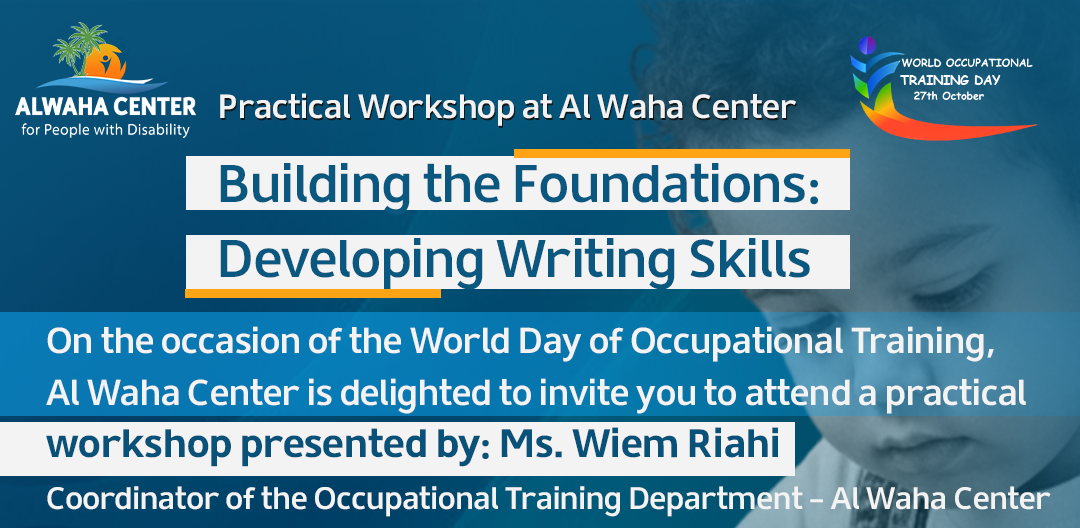
Supporting Handwriting Skills in Children with Dysgraphia
Through Occupational Therapy
Dysgraphia is a learning disability that affects a child's ability to write legibly, consistently, and at an efficient speed. This condition not only hinders handwriting but can also affect spelling, organizing thoughts on paper, and other cognitive functions related to writing. When children face difficulties writing, it can lead to frustration and a lack of confidence, making academic tasks even harder. However, occupational therapy (OT) offers significant support to children with dysgraphia, focusing on developing handwriting skills and ensuring academic success.
As a parent, it can be overwhelming to see your child struggle with writing tasks. Understanding how occupational therapy can help can equip you with tools and strategies to support your child’s development effectively. This article discusses how occupational therapy plays a crucial role in managing dysgraphia and providing practical solutions to enhance handwriting.
Dysgraphia is characterized by difficulty with handwriting tasks that involve fine motor control, such as forming letters, spacing words, and maintaining proper writing posture. The signs of dysgraphia can vary but generally include:
- Illegible handwriting
- Frequent letter reversals
- Inconsistent letter sizes and spacing
- Slowness when writing
- Difficulty organizing written thoughts on paper
- Poor grip on the writing utensil
It’s essential to note that dysgraphia isn't just about messy handwriting or laziness—it’s a neurologically-based condition that can be improved with the right support.
Children with dysgraphia may experience challenges with other tasks as well, such as drawing or copying from the board. These difficulties often overlap with other developmental issues, such as fine motor delays, attention deficit disorders (ADD/ADHD), or visual-spatial difficulties. Occupational therapists are well-equipped to help children improve their handwriting by addressing the multiple factors that contribute to dysgraphia, ultimately improving academic success and self-esteem.
Occupational therapy is a therapeutic approach that helps children build necessary life skills to enhance their physical, emotional, and cognitive development. When it comes to dysgraphia, OT uses a comprehensive approach to target both the motor skills needed for handwriting and the environmental factors affecting writing performance.
An occupational therapist will first perform an in-depth assessment to determine the specific challenges your child is facing. This may include evaluating the child’s muscle strength, grip, posture, sensory preferences, and cognitive abilities related to writing. Once the therapist identifies these challenges, they will design a personalized treatment plan that uses proven strategies to improve handwriting skills.
Occupational therapists employ various techniques to address different aspects of handwriting difficulties. Below are the main strategies that help children with dysgraphia build writing skills:
Handwriting requires precise control over small muscles in the fingers and hands. Children with dysgraphia may struggle with these fine motor tasks. One of the primary goals of occupational therapy is to strengthen hand muscles to improve control when writing.
- Pinch Strengthening: Simple activities like using tweezers to pick up small objects or rolling playdough can help your child improve finger strength.
- Hand Exercises: Therapists may also incorporate activities such as finger tapping or using small building blocks to engage and strengthen hand muscles.
- Gripping Practice: Exercises involving squeezing or holding objects (e.g., using a squishy ball or crumpling paper) are aimed at improving grip strength, which is crucial for pencil control.
Proper posture and core muscle strength play a significant role in writing ability. Without a stable base to support the arm, hands may lack the stability required for legible writing. A child with poor posture may struggle to hold the pen comfortably for long periods, affecting the quality of their handwriting.
- Core Stability Exercises: OT often includes exercises like sitting on a therapy ball, balancing on one leg, or even using resistance bands to build shoulder, arm, and upper body strength, improving posture and control.
- Seated Posture Modifications: Teachers and therapists may suggest adjusting desk height, the use of special chairs or supports, or offering "fidget tools" to keep your child engaged while supporting a comfortable posture.
Many children with dysgraphia experience sensory processing difficulties. This means that they might struggle with how they feel or perceive their movements and surroundings, making handwriting an even more challenging task. Occupational therapists use sensory integration strategies to address this by helping children become more aware of their body’s movements and sensory inputs.
- Weighted Tools: Weighted pencil grips or wristbands can provide calming sensory input, helping the child concentrate better on the writing task. This deep touch input improves focus and stability while writing.
- Sensory Breaks: If writing feels overwhelming, short breaks that involve jumping, stretching, or tactile activities can reset the child’s focus and energy.
- Tactile Writing: Writing with materials like sandpaper, fabric, or even textured surfaces (shaving cream, for example) provides sensory feedback that may help improve letter formation.
Visual-motor integration (VMI) is the ability to coordinate visual perception with the motor skills required to perform tasks. Writing is a highly visual-motor task, and if a child struggles to integrate visual information with hand movement, their handwriting will suffer. Occupational therapy works on exercises that strengthen VMI and improve coordination between the child’s eyes and hands.
- Tracing and Copying: Activities that involve tracing or copying letters and numbers are often used to enhance visual tracking and motor coordination.
- Puzzles and Visual-Spatial Exercises: Therapists may incorporate puzzles or mazes to help strengthen the child’s ability to match images to movements.
- Drawing Shapes and Forms: Practicing shapes and lines in a controlled, structured way helps children refine the basic building blocks of handwriting.
There are several evidence-based handwriting programs and tools that occupational therapists use to teach children effective writing techniques. These include:
- Handwriting Without Tears (HWT): This program is designed to teach handwriting using a multisensory approach. Children engage in tactile activities, work with simple strokes and shapes, and practice writing letters in a logical, structured sequence. HWT can greatly benefit children with dysgraphia by breaking down complex tasks into smaller, manageable steps.
- The Zones of Regulation: This program helps children self-regulate during writing tasks. It emphasizes body awareness, social and emotional engagement, and making conscious choices to improve performance.
Some therapists also recommend the use of adaptive tools to assist with handwriting challenges. These might include specialized pencils, grips, or even computers and speech-to-text software, which may be particularly helpful when traditional writing proves too difficult.
As a parent, there are several ways you can support your child’s progress outside of therapy sessions:
- Create a Dedicated Writing Area: Set up a quiet, comfortable space at home for handwriting practice, minimizing distractions.
-Establish Routines: Consistent handwriting exercises, even short ones, can lead to improvement. Break tasks into small chunks so that your child is not overwhelmed.
- Provide Positive Reinforcement: Recognize and celebrate improvements, even small ones. This helps boost confidence and motivate your child to keep working on their handwriting.
- Use Writing as a Fun Activity: Incorporating games, crafts, or art into handwriting exercises can make writing more enjoyable for children. Allowing them to write about their interests (e.g., drawing, journaling) can motivate them to practice.
Conclusion
Supporting a child with dysgraphia requires patience and understanding. Through the guidance of occupational therapy, children can overcome handwriting difficulties by strengthening fine motor skills, improving posture, managing sensory issues, and practicing effective techniques. The goal is to enable children to express themselves confidently, both in school and beyond.
Occupational therapy offers invaluable tools to address the physical, sensory, and cognitive aspects of dysgraphia. With the proper intervention, a child can experience greater success in writing, better academic performance, and an improved sense of self-esteem. Parents, educators, and therapists can all collaborate to create a supportive environment where children feel empowered to succeed in their educational journey.
References
- Fun & Function. (n.d.). *Occupational Therapy for Dysgraphia*. Retrieved from [Fun & Function](https://funandfunction.com/blog/occupational-therapy-for-dysgraphia )
- ADDitude. (n.d.). *Practical Strategies & Tools to Help Kids with Dysgraphia*. Retrieved from [ADDitude](https://www.additudemag.com/how-to-improve-handwriting-dysgraphia-treatment/ )
- LDExplained. (n.d.). *Occupational Therapy for Dysgraphia*. Retrieved from [LDExplained](https://www.ldexplained.org/learning-disabilities-lp/types-of-learning-disabilities/dysgraphia-definition-causes/recommended-therapies-for-dysgraphia/occupational-therapy-for-dysgraphia/ )
- Understood.org. (n.d.). *Treatment Options for Dysgraphia*. Retrieved from [Understood](https://www.understood.org/en/articles/treatment-options-for-dysgraphia )
Comments({{ comments_count }})
{{ item.name }}
{{ item.created_at_format }}{{ item.message }}
Leave a Reply
Leave a Reply